Groundwork for safe, predictable, and masterful application
Chapter 4: Sanitation & Decontamination
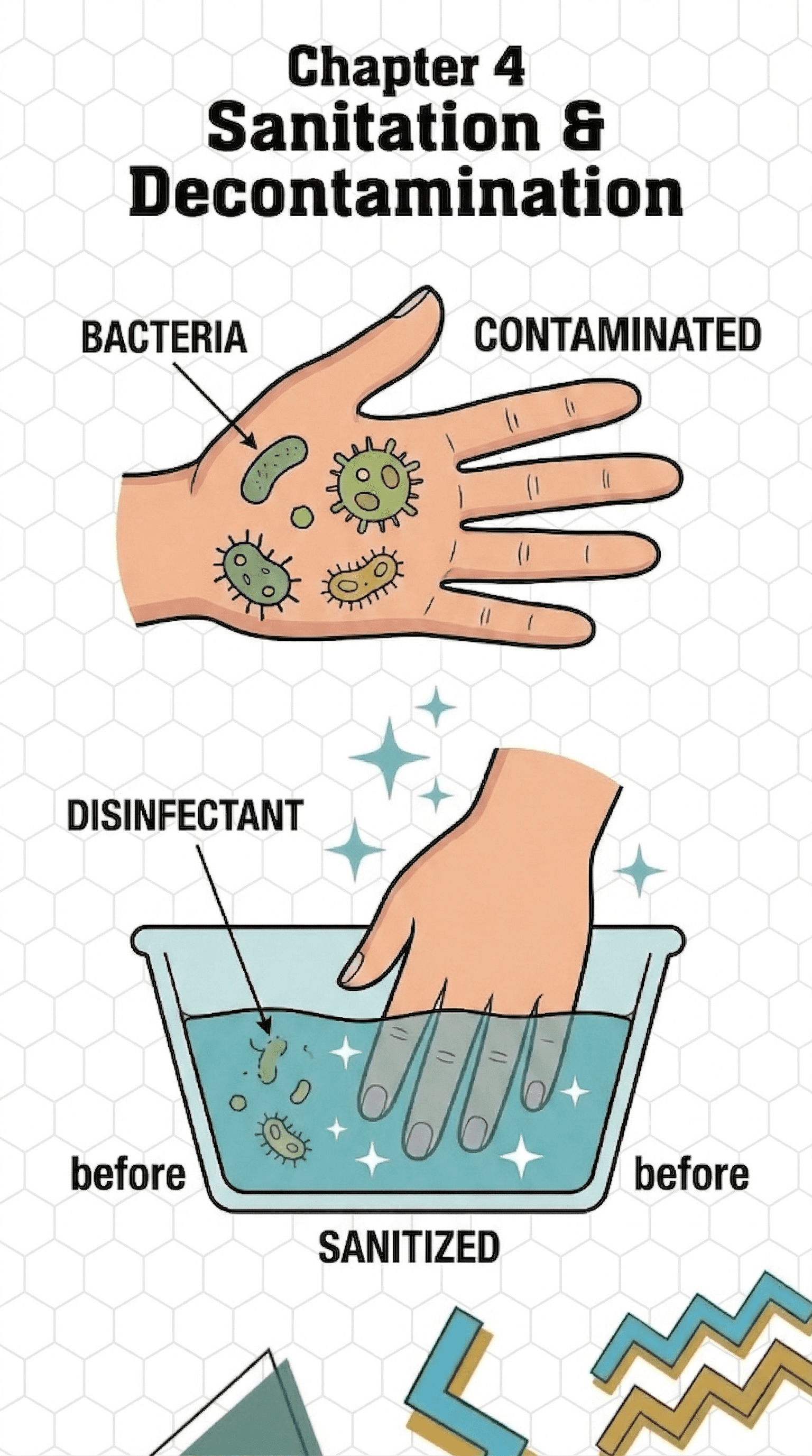
The First Rule of the Station: Hygiene
In chemistry and nail technology, physical contamination is the primary enemy of success. Before you can begin applying professional chemicals, you must sanitize and decontaminate your workspace, your implements, and both sets of hands (yours and the client’s). This critical step prevents the introduction of bacteria and fungi to the service.
Pro Tip: If using Barbicide (recommended) you must let it be in contact with the surface intended to be sanitized for 10 minutes for the product to function appropriately. Can be used in a spray for surface areas as well.
 The primary bacterial agent responsible for “green bacterial infections” or “greenies” (often erroneously called “nail mold” by untrained technicians) is Pseudomonas aeruginosa. These microscopic bacteria thrive in the small, warm, trapped spaces left when an enhancement lifts or when moisture is sealed in during application. If you skip proper decontamination, you run the risk of sealing these bacteria under the cured acrylic enhancement, providing them the perfect environment to multiply and cause severe biological issues. By physically reducing the microbial population on the hands and nails to a professionally acceptable level of decontamination, you create a safe, stable foundation for proper chemical application. Excellence always begins with sanitation!
🏁 UNIT 1 CONCLUSION 🏁
THE FOUNDATION IS SET

You now possess the biological and chemical knowledge required of a true professional. By understanding the core mechanics of acrylic chemistry, utilizing chemically inert tools at your station, respecting the living anatomy of the natural nail, and enforcing strict decontamination standards, you have set the stage for safe, masterful application. The environment is clean, and the tools are ready.
Next, we prepare the canvas.